6
0
📍 Noticed
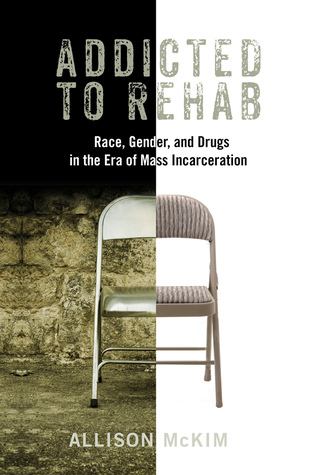
Addicted to Rehab: Race, Gender, and Drugs in the Era of Mass Incarceration (Critical Issues in Crime and Society)
by Allison McKim
Sponsored
Synopsis
After decades of the American “war on drugs” and relentless prison expansion, political officials are finally challenging mass incarceration. Many point to an apparently promising solution to reduce the prison population: addiction treatment. In Addicted to Rehab, Bard ...
After decades of the American “war on drugs” and relentless prison expansion, political officials are finally challenging mass incarceration. Many point to an apparently promising solution to reduce the prison population: addiction treatment.
In Addicted to Rehab, Bard College sociologist Allison McKim gives an in-depth and innovative ethnographic account of two such rehab programs for women, one located in the criminal justice system and one located in the private healthcare system—two very different ways of defining and treating addiction. McKim’s book shows how addiction rehab reflects the race, class, and gender politics of the punitive turn. As a result, addiction has become a racialized category that has reorganized the link between punishment and welfare provision. While reformers hope that treatment will offer an alternative to punishment and help women, McKim argues that the framework of addiction further stigmatizes criminalized women and undermines our capacity to challenge gendered subordination. Her study ultimately reveals a two-tiered system, bifurcated by race and class.
In Addicted to Rehab, Bard College sociologist Allison McKim gives an in-depth and innovative ethnographic account of two such rehab programs for women, one located in the criminal justice system and one located in the private healthcare system—two very different ways of defining and treating addiction. McKim’s book shows how addiction rehab reflects the race, class, and gender politics of the punitive turn. As a result, addiction has become a racialized category that has reorganized the link between punishment and welfare provision. While reformers hope that treatment will offer an alternative to punishment and help women, McKim argues that the framework of addiction further stigmatizes criminalized women and undermines our capacity to challenge gendered subordination. Her study ultimately reveals a two-tiered system, bifurcated by race and class.
You May Also Like

Kei X Yaku: Bound By Law 9
Yoshie Kaoruhara

Small Magic: Short Fiction, 1977-2020
Terry Brooks

The Scouting Guide to Basic Fishing: An Officially-Licensed Book of the Boy Scouts of America: 200 Essential Skills for Selecting Tackle, Tying Knots, Casting, and Catching Fish
The Boy Scouts of America

Enchanted Bookshop: cozy small-town vibes with a touch of romance and magic
Lula Ward

The Permanent Holdout: Jackson Browne, His Music, His America
Cornel Bonca

Elbow Grease
John Cena
Business Picks
View All
The Let Them Theory: A Life-Changing Tool That Millions of People Can't Stop Talking About
Mel Robbins

The Haves and Have-Yachts: Dispatches on the Ultrarich
Evan Osnos

The High 5 Habit: Take Control of Your Life with One Simple Habit
Mel Robbins

Revenge of the Tipping Point: Overstories Superspreaders and the Rise of Social Engineering
Malcolm Gladwell

The Trading Game: A Confession
Gary Stevenson

How Countries Go Broke: The Big Cycle
Ray Dalio
