11
0
Support the library.
Your support helps keep books free for everyone ❤️
📍 Noticed
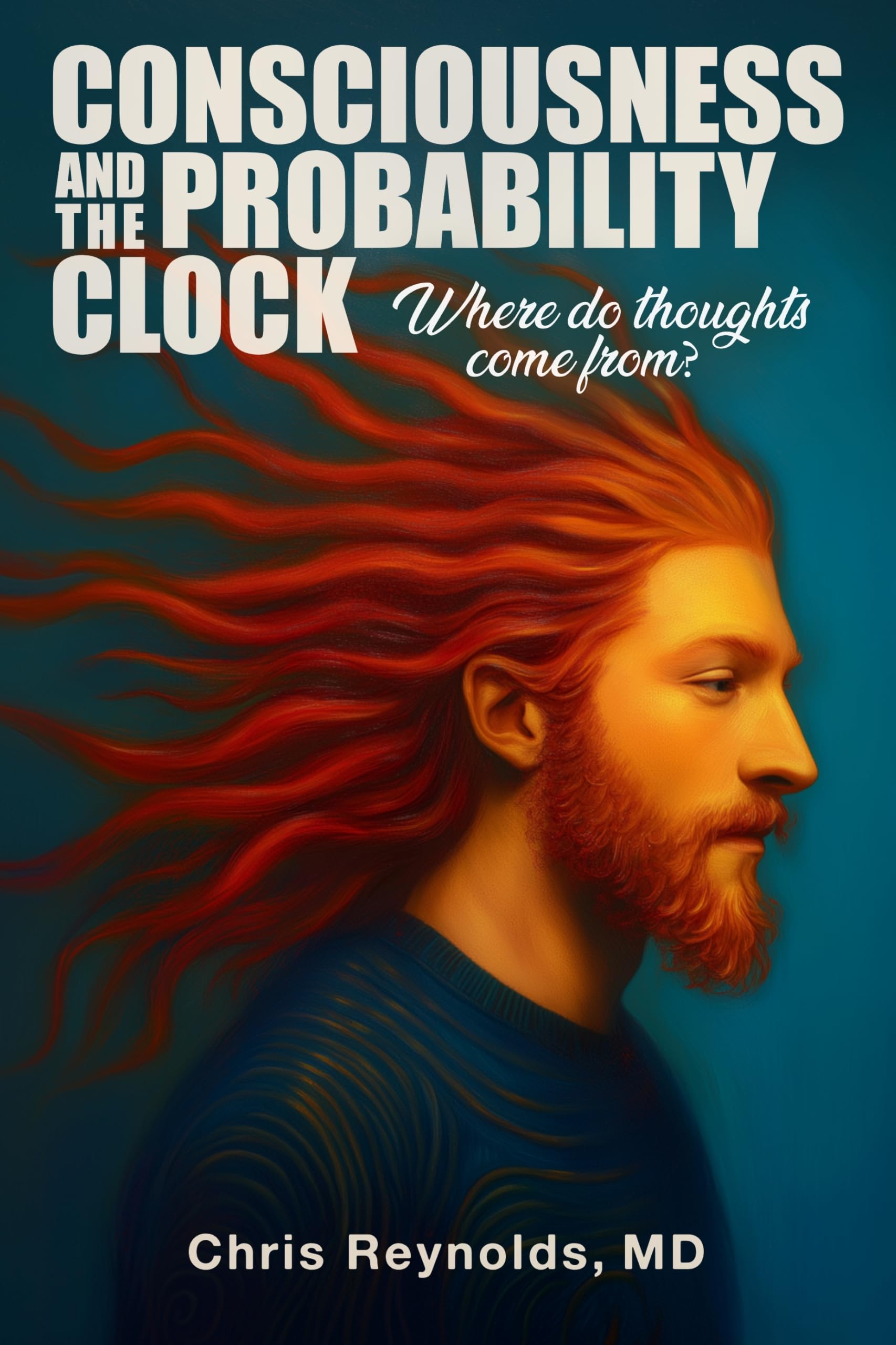
Consciousness and the Probability Clock: Where Do Thoughts Come From?
by Chris Reynolds
Sponsored
Synopsis
What if your thoughts don’t arise from a stream—but from a loop?
And what if that loop has been ticking inside your brain this whole time, quietly shaping your perception of time, self, and reality?
In this bold and interdisciplinary journey through neuroscience, theoretical physics, and ...
And what if that loop has been ticking inside your brain this whole time, quietly shaping your perception of time, self, and reality?
In this bold and interdisciplinary journey through neuroscience, theoretical physics, and ...
What if your thoughts don’t arise from a stream—but from a loop?
And what if that loop has been ticking inside your brain this whole time, quietly shaping your perception of time, self, and reality?
In this bold and interdisciplinary journey through neuroscience, theoretical physics, and artificial intelligence, neurologist Dr. Chris Reynolds proposes a revolutionary model of consciousness: the Probability Clock. At the heart of this model lies the thalamus—a central brain structure long known for relaying sensory input. But in Reynolds’ view, the thalamus does far more: it recursively filters, times, and shapes experience itself.
Through recursive loops and phase dynamics, the book explores how the brain may convert information into structured perceptual packets, generating a stable sense of the Current Moment. The model draws connections between Bayesian inference, entropy, quantum-like uncertainty, and the neurobiology of thought, memory, attention, and inner speech.
Blending clinical insight with vivid metaphors, Consciousness and the Probability Clock takes readers on a journey from Planck time to human cognition—linking micro and macro scales of intelligence, and even suggesting how AI might one day simulate (or never quite reach) this recursive spark of awareness.
Perfect for readers of Douglas Hofstadter, Karl Friston, Antonio Damasio, and Ray Kurzweil, this is both a scientific inquiry and a philosophical adventure—a collaborative exploration between a human mind and an AI assistant, asking the oldest question of all: Where do our thoughts come from?
You May Also Like

Like Family
Erin O. White

The Tea Girl of Hummingbird Lane: A Novel
Lisa See

The 5 Love Languages of Teenagers: The Secret to Loving Teens Effectively
Gary Chapman

The Infamous Gilberts
Angela Tomaski
The Goodbye Man (Colter Shaw, #2)
Jeffery Deaver
A Cup of Zen: 21 Short Stories to Calm the Mind, Stop Overthinking, and Find Inner Peace - Includes Reflections for Beginners (The Zen Storyteller Book 1)
Kai Tsukimi


