103
0
Support the library.
Your support helps keep books free for everyone ❤️
📈 Trending
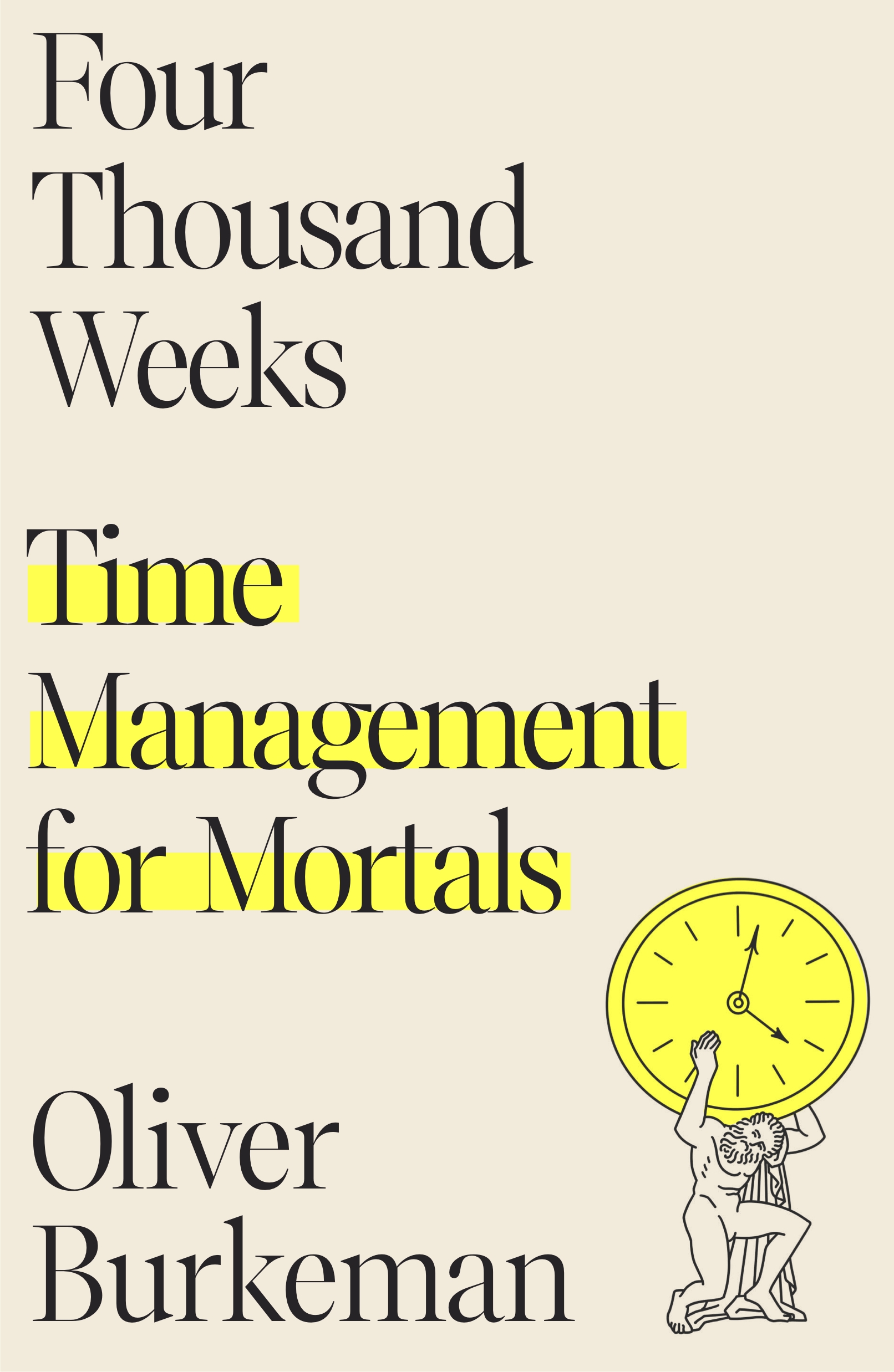
Four Thousand Weeks: Time Management for Mortals
by Oliver Burkeman
Sponsored
Synopsis
The average human lifespan is absurdly, insultingly brief. Assuming you live to be eighty, you have just over four thousand weeks.
Nobody needs to be told there isn’t enough time. We’re obsessed with our lengthening to-do lists, overfilled inboxes, work-life balance, and ...
Nobody needs to be told there isn’t enough time. We’re obsessed with our lengthening to-do lists, overfilled inboxes, work-life balance, and ...
The average human lifespan is absurdly, insultingly brief. Assuming you live to be eighty, you have just over four thousand weeks.
Nobody needs to be told there isn’t enough time. We’re obsessed with our lengthening to-do lists, overfilled inboxes, work-life balance, and ceaseless battle against distraction; we’re deluged with advice on becoming more productive and efficient and life hacks to optimize our days. But such techniques often end up making things worse. The sense of anxious hurry grows more intense, and still the most meaningful parts of life seem to lie just beyond the horizon. Still, we rarely make the connection between our daily struggles with time and the ultimate time management problem: the challenge of how best to use our four thousand weeks.
Drawing on the insights of both ancient and contemporary philosophers, psychologists, and spiritual teachers, Oliver Burkeman delivers an entertaining, humorous, practical, and ultimately profound guide to time and time management. Rejecting the futile modern obsession with “getting everything done,” Four Thousand Weeks introduces readers to tools for constructing a meaningful life by embracing finitude, showing that many of the unhelpful ways we’ve come to think about time aren’t inescapable, unchanging truths, but choices we’ve made as individuals and as a society—and that we could do things differently.
Nobody needs to be told there isn’t enough time. We’re obsessed with our lengthening to-do lists, overfilled inboxes, work-life balance, and ceaseless battle against distraction; we’re deluged with advice on becoming more productive and efficient and life hacks to optimize our days. But such techniques often end up making things worse. The sense of anxious hurry grows more intense, and still the most meaningful parts of life seem to lie just beyond the horizon. Still, we rarely make the connection between our daily struggles with time and the ultimate time management problem: the challenge of how best to use our four thousand weeks.
Drawing on the insights of both ancient and contemporary philosophers, psychologists, and spiritual teachers, Oliver Burkeman delivers an entertaining, humorous, practical, and ultimately profound guide to time and time management. Rejecting the futile modern obsession with “getting everything done,” Four Thousand Weeks introduces readers to tools for constructing a meaningful life by embracing finitude, showing that many of the unhelpful ways we’ve come to think about time aren’t inescapable, unchanging truths, but choices we’ve made as individuals and as a society—and that we could do things differently.
You May Also Like
Murder Bites: A Novel
Mimi Montgomery

Sidetracked (Mindf*ck Series Book 2)
S.T. Abby

Ruled Out (Seattle Scorpions Series Book 4)
Ruth Stilling

Fiddler on the Roof
Joseph Stein

Always Hope (Guardian Hall Book 2)
RJ Scott

Niedermeyer's Electroencephalography: Basic Principles, Clinical Applications, and Related Fields
Donald L. Schomer
Memoir Picks
View All
The Flower Bearers: A Memoir
Rachel Eliza Griffiths

That's a Great Question I'd Love to Tell You
Elyse Myers

Simply More: A Book for Anyone Who Has Been Told They're Too Much
Cynthia Erivo
The In-Between: Unforgettable Encounters During Life's Final Moments
Hadley Vlahos

You Wanna Be on Top?: A Memoir of Makeovers, Manipulation, and Not Becoming America's Next Top Model
Sarah Hartshorne

Paris: The Memoir
Paris Hilton
