3
0
Support the library.
Your support helps keep books free for everyone ❤️
📍 Noticed
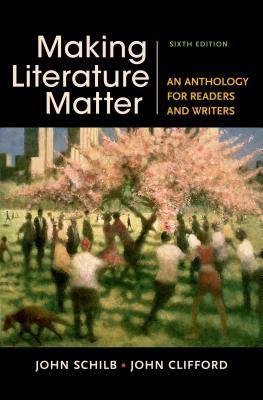
Making Literature Matter: An Anthology for Readers and Writers
by John Schilb
Sponsored
Synopsis
"What is literature? Why and how does it matter?"John Schilb and John Clifford reply that "literature is part of human relationships; people make literature matter to other people." In these pages, the authors invite you to learn to "make literature matter to others as well as to ...
"What is literature? Why and how does it matter?"
John Schilb and John Clifford reply that "literature is part of human relationships; people make literature matter to other people." In these pages, the authors invite you to learn to "make literature matter to others as well as to yourself." How?
• First, Part One of this book offers advice on how to shape your personal responses to stories, poems, plays, and essays into thoughtful and well-supported arguments that others will find compelling and persuasive.
• Then, Part Two presents clusters of literary works that ask you to explore issues of family, teaching and learning, love, justice, and mortality. One cluster asks "Is This Love?" of the baffling, troubling emotional worlds depicted in stories by William Faulkner, Raymond Carver, and F. Scott Fitzgerald. Another cluster examines the ethics of punishment in poems by Robert Browning, Carolyn Forché, Seamus Heaney, and Sherman Alexie. Some clusters consider how writers "revise" the work of other writers. For example, see how Charles Perrault and the Brothers Grimm tell the tale of Little Red Riding Hood; then read Angela Carter's vivid and startling contemporary version.
Throughout, questions and writing assignments challenge you to compare and analyze literary works as you develop your own ideas about them. As you learn to present those ideas clearly and cogently, you will discover how to make literature matter—to yourself and to others.
John Schilb and John Clifford reply that "literature is part of human relationships; people make literature matter to other people." In these pages, the authors invite you to learn to "make literature matter to others as well as to yourself." How?
• First, Part One of this book offers advice on how to shape your personal responses to stories, poems, plays, and essays into thoughtful and well-supported arguments that others will find compelling and persuasive.
• Then, Part Two presents clusters of literary works that ask you to explore issues of family, teaching and learning, love, justice, and mortality. One cluster asks "Is This Love?" of the baffling, troubling emotional worlds depicted in stories by William Faulkner, Raymond Carver, and F. Scott Fitzgerald. Another cluster examines the ethics of punishment in poems by Robert Browning, Carolyn Forché, Seamus Heaney, and Sherman Alexie. Some clusters consider how writers "revise" the work of other writers. For example, see how Charles Perrault and the Brothers Grimm tell the tale of Little Red Riding Hood; then read Angela Carter's vivid and startling contemporary version.
Throughout, questions and writing assignments challenge you to compare and analyze literary works as you develop your own ideas about them. As you learn to present those ideas clearly and cogently, you will discover how to make literature matter—to yourself and to others.
You May Also Like

The Chain Between Worlds
Johnathon Nicolaou

The Secret Life of Plants: A Fascinating Account of the Physical, Emotional and Spiritual Relations Between Plants and Man
Peter Tompkins

Falter: Has the Human Game Begun to Play Itself Out?
Bill McKibben
SQL Queries for Mere Mortals: A Hands-On Guide to Data Manipulation in SQL
John L. Viescas
The Fair Botanists
Sara Sheridan

Courage to Say No: A Pakistani Female Doctor's Battle Against Sexual Exploitation
Raana Mahmood