1
0
Support the library.
Your support helps keep books free for everyone ❤️
📍 Noticed
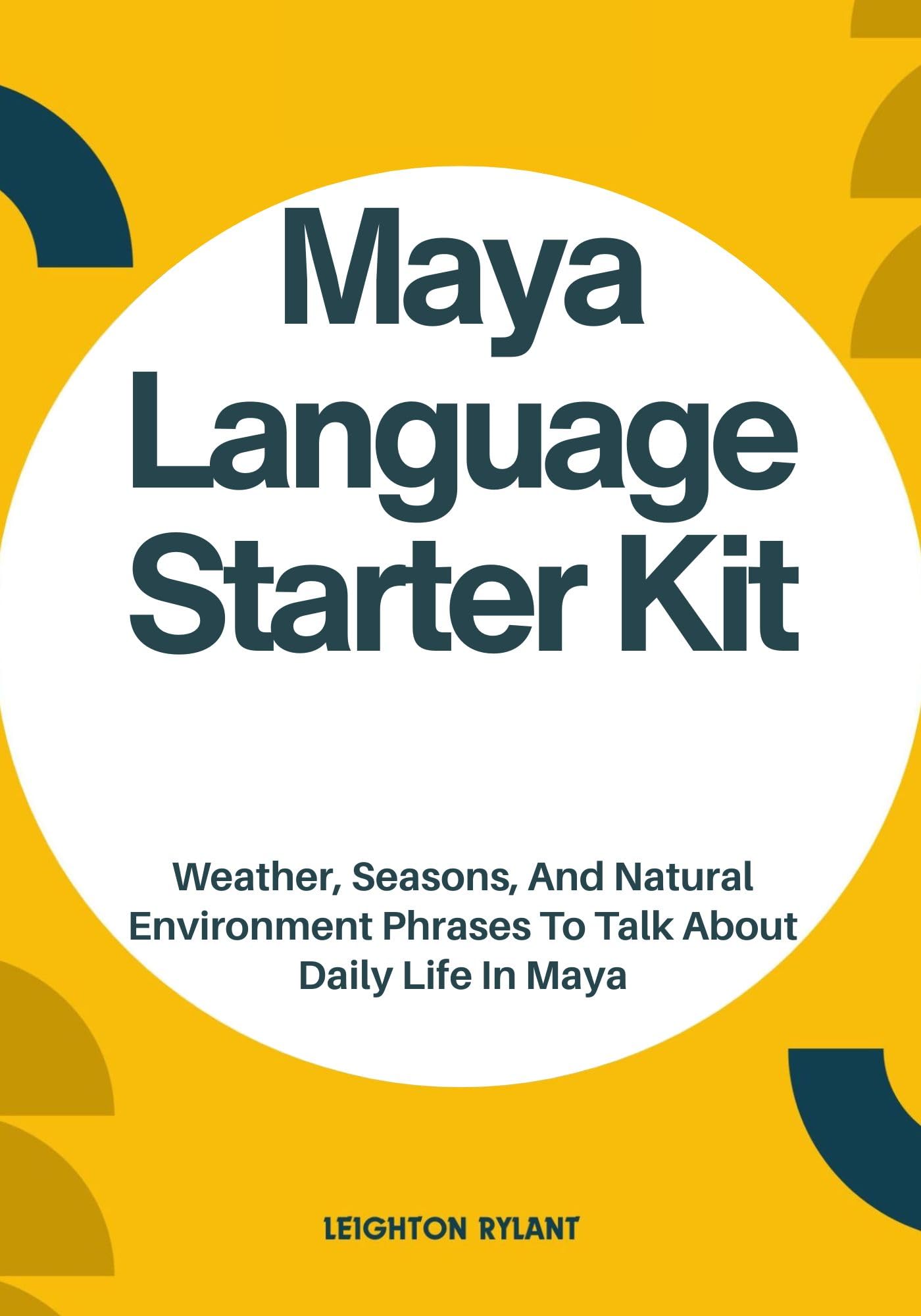
Maya Language Starter Kit: Weather, Seasons, And Natural Environment Phrases To Talk About Daily Life In Maya
by LEIGHTON RYLANT
Sponsored
Synopsis
The Maya language is a collection of indigenous languages that are predominantly spoken by the Maya people, who inhabit regions of Mexico, Guatemala, Belize, Honduras, and El Salvador. The Maya language family is quite extensive, consisting of more than 30 distinct languages and dialects; however, ...
The Maya language is a collection of indigenous languages that are predominantly spoken by the Maya people, who inhabit regions of Mexico, Guatemala, Belize, Honduras, and El Salvador. The Maya language family is quite extensive, consisting of more than 30 distinct languages and dialects; however, they all share certain common characteristics. Yucatec Maya, K'iche', and Q'eqchi' are the most frequently spoken of these languages. These languages, which have been spoken for thousands of years, are collectively a part of the broader Mayan language family. They possess a rich cultural and historical heritage.
Key Features of the Maya Language Family:
• Agglutinative Structure: Maya languages tend to be agglutinative, meaning that words are often made up of a base root with additional prefixes and suffixes attached to modify meaning. This allows for the creation of complex words from simpler ones.
• Pronunciation and Sounds: The Maya languages typically have a relatively small number of vowel sounds and a larger number of consonants. They often feature consonant clusters and may have glottalized or ejective sounds, depending on the specific language.
• Word Order: Many of the Maya languages have a VSO (Verb-Subject-Object) word order, though this can vary depending on the language and context. This differs from English's typical SVO (Subject-Verb-Object) structure.
• Tone: Some Maya languages, particularly Yucatec Maya, are tonal. This means that the pitch or intonation used when pronouncing a word can change its meaning.
• Possessive Structure: Possession is expressed through the use of specific markers that are attached to the noun, unlike English, where possession is often indicated through an apostrophe ('s).
Writing System and Historical Context:
• The ancient Maya civilization, known for its advanced culture and architecture, also developed a complex writing system, known as Maya hieroglyphics, which combined logograms and syllabic symbols. This system was used to record historical events, astronomical data, and other important cultural information on monuments, codices, and ceramics. While the Maya hieroglyphic script is no longer widely used for everyday communication, it remains an important part of Maya heritage.
Modern Maya Languages:
• Today, the Maya languages are still spoken by millions of people, though many are endangered due to the dominance of Spanish and other factors. In recent years, there have been efforts to revitalize and preserve the languages, including the creation of educational programs, the publication of books, and the use of Maya languages in local media.
Learning Maya:
• Learning a Maya language offers a fascinating glimpse into the cultural and historical richness of the Maya people. There are various resources available for those interested in learning languages like Yucatec Maya, K'iche', or others. While the languages vary from region to region, they all reflect the shared heritage of the Maya civilization.
You May Also Like

Salaam, with Love
Sara Sharaf Beg

Monsters of the Week: The Complete Critical Companion to The X-Files
Zack Handlen

A People's Tragedy: The Russian Revolution, 1891 - 1924
Orlando Figes

Total Tech Takeover: What everyone must know and do about AI before it’s too late
Mark J
A Guerra das Duas Rainhas
Jennifer L. Armentrout

The Mythmakers
Keziah Weir
Non Fiction Picks
View All
From Here to the Great Unknown: A Memoir
Lisa Marie Presley
Stop, in the Name of God: Why Honoring the Sabbath Will Transform Your Life
Charlie Kirk

What I Ate in One Year (And Related Thoughts)
Stanley Tucci

The Einstein Vendetta: Hitler, Mussolini, and a True Story of Murder
Thomas Harding

The Flower Bearers: A Memoir
Rachel Eliza Griffiths

After Purity: Race, Sex, and Religion in White Christian America
Sara Moslener
