1
0
Support the library.
Your support helps keep books free for everyone ❤️
📍 Noticed
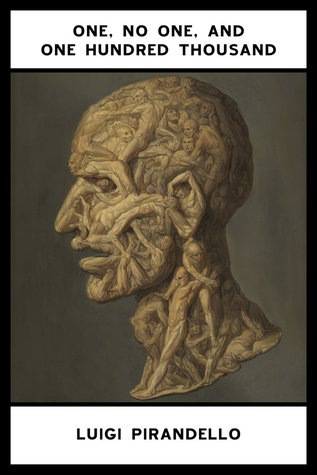
One, No One and One Hundred Thousand
by Luigi Pirandello
Sponsored
Synopsis
Luigi Pirandello’s extraordinary final novel begins when Vitangelo Moscarda’s wife remarks that Vitangelo’s nose tilts to the right. This commonplace interaction spurs the novel’s unemployed, wealthy narrator to examine himself, the way he perceives others, and the ways that others perceive ...
Luigi Pirandello’s extraordinary final novel begins when Vitangelo Moscarda’s wife remarks that Vitangelo’s nose tilts to the right. This commonplace interaction spurs the novel’s unemployed, wealthy narrator to examine himself, the way he perceives others, and the ways that others perceive him. At first he only notices small differences in how he sees himself and how others do; but his self-examination quickly becomes relentless, dizzying, leading to often darkly comic results as Vitangelo decides that he must demolish that version of himself that others see.
Pirandello said of his 1926 novel that it “deals with the disintegration of the personality. It arrives at the most extreme conclusions, the farthest consequences.” Indeed, its unnerving humor and existential dissection of modern identity find counterparts in Samuel Beckett’s Molloy trilogy and the works of Thomas Bernhard and Vladimir Nabokov.
“In a world that has, justifiably, become a good deal less optimistic than it was sixty-odd years ago, the drama of Vitangelo Moscarda – the tragedy of a man whose great aim was to see clearly and to be truly himself – has perhaps become more familiar and more acceptable. The terrible honesty of the novel and of its protagonist has, with time, become all the more desirable and impelling. Vitangelo has been vindicated.” — William Weaver
Pirandello said of his 1926 novel that it “deals with the disintegration of the personality. It arrives at the most extreme conclusions, the farthest consequences.” Indeed, its unnerving humor and existential dissection of modern identity find counterparts in Samuel Beckett’s Molloy trilogy and the works of Thomas Bernhard and Vladimir Nabokov.
“In a world that has, justifiably, become a good deal less optimistic than it was sixty-odd years ago, the drama of Vitangelo Moscarda – the tragedy of a man whose great aim was to see clearly and to be truly himself – has perhaps become more familiar and more acceptable. The terrible honesty of the novel and of its protagonist has, with time, become all the more desirable and impelling. Vitangelo has been vindicated.” — William Weaver
You May Also Like

Letters of Wolfgang Amadeus Mozart
Wolfgang Amadeus Mozart

Plantopedia: The Definitive Guide to Houseplants
Lauren Camilleri
Autumn Crocus / Service / Touch Wood: Three plays by Dodie Smith
Dodie Smith

Do You Remember?
Freida McFadden

The Warrior Queen (The Hundredth Queen, #4)
Emily R. King
Savage Stalkers: Masked men Novella (Masked Men series)
Jaye Pratt
Science Picks
View All
Co-Intelligence: Living and Working with AI
Ethan Mollick

Is a River Alive?
Robert Macfarlane

All in Her Head: The Truth and Lies Early Medicine Taught Us About Women's Bodies and Why It Matters Today
Elizabeth Comen

This Brutal Moon
Bethany Jacobs

The Primal Hunter 9
Zogarth

The Gene: An Intimate History
Siddhartha Mukherjee
