2
0
Support the library.
Your support helps keep books free for everyone ❤️
📍 Noticed
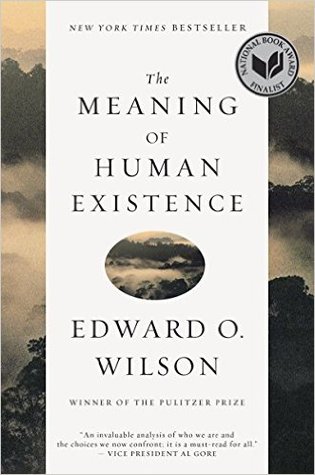
The Meaning of Human Existence
by Edward O. Wilson
Sponsored
Synopsis
In The Meaning of Human Existence, his most philosophical work to date, Pulitzer Prize–winning biologist Edward O. Wilson grapples with these and other existential questions, examining what makes human beings supremely different from all other species. Searching for meaning in what Nietzsche once ...
In The Meaning of Human Existence, his most philosophical work to date, Pulitzer Prize–winning biologist Edward O. Wilson grapples with these and other existential questions, examining what makes human beings supremely different from all other species. Searching for meaning in what Nietzsche once called "the rainbow colors" around the outer edges of knowledge and imagination, Wilson takes his readers on a journey, in the process bridging science and philosophy to create a twenty-first-century treatise on human existence—from our earliest inception to a provocative look at what the future of mankind portends.
Continuing his groundbreaking examination of our "Anthropocene Epoch," which he began with The Social Conquest of Earth, described by the New York Times as "a sweeping account of the human rise to domination of the biosphere," here Wilson posits that we, as a species, now know enough about the universe and ourselves that we can begin to approach questions about our place in the cosmos and the meaning of intelligent life in a systematic, indeed, in a testable way.
Once criticized for a purely mechanistic view of human life and an overreliance on genetic predetermination, Wilson presents in The Meaning of Human Existence his most expansive and advanced theories on the sovereignty of human life, recognizing that, even though the human and the spider evolved similarly, the poet's sonnet is wholly different from the spider's web. Whether attempting to explicate "The Riddle of the Human Species," "Free Will," or "Religion"; warning of "The Collapse of Biodiversity"; or even creating a plausible "Portrait of E.T.," Wilson does indeed believe that humanity holds a special position in the known universe.
The human epoch that began in biological evolution and passed into pre-, then recorded, history is now more than ever before in our hands. Yet alarmed that we are about to abandon natural selection by redesigning biology and human nature as we wish them, Wilson soberly concludes that advances in science and technology bring us our greatest moral dilemma since God stayed the hand of Abraham.
Continuing his groundbreaking examination of our "Anthropocene Epoch," which he began with The Social Conquest of Earth, described by the New York Times as "a sweeping account of the human rise to domination of the biosphere," here Wilson posits that we, as a species, now know enough about the universe and ourselves that we can begin to approach questions about our place in the cosmos and the meaning of intelligent life in a systematic, indeed, in a testable way.
Once criticized for a purely mechanistic view of human life and an overreliance on genetic predetermination, Wilson presents in The Meaning of Human Existence his most expansive and advanced theories on the sovereignty of human life, recognizing that, even though the human and the spider evolved similarly, the poet's sonnet is wholly different from the spider's web. Whether attempting to explicate "The Riddle of the Human Species," "Free Will," or "Religion"; warning of "The Collapse of Biodiversity"; or even creating a plausible "Portrait of E.T.," Wilson does indeed believe that humanity holds a special position in the known universe.
The human epoch that began in biological evolution and passed into pre-, then recorded, history is now more than ever before in our hands. Yet alarmed that we are about to abandon natural selection by redesigning biology and human nature as we wish them, Wilson soberly concludes that advances in science and technology bring us our greatest moral dilemma since God stayed the hand of Abraham.
You May Also Like

When He Was Wicked: Bridgerton: Francesca's Story
Julia Quinn

Days of the Turbins
Mikhail Bulgakov

Mind Shift: It Doesn't Take a Genius to Think Like One
Erwin Raphael McManus
Hopeless (Chestnut Springs, 5)
Elsie Silver
The Loud House Vol. 25
The Loud House Creative Team

Leave Me Behind
K.M. Moronova
Religion Picks
View All
The Medici Return
Steve Berry
When You're Ready, This Is How You Heal
Brianna Wiest

Soul Boom: Why We Need a Spiritual Revolution
Rainn Wilson

The Cat Who Taught Zen: A Beautifully Illustrated Exploration of Self-Discovery
James Norbury
The Bible Says So: What We Get Right (and Wrong) About Scripture’s Most Controversial Issues
Daniel McClellan

Lighter: Let Go of the Past, Connect With the Present, and Expand the Future
Yung Pueblo
