1
0
Support the library.
Your support helps keep books free for everyone ❤️
📍 Noticed
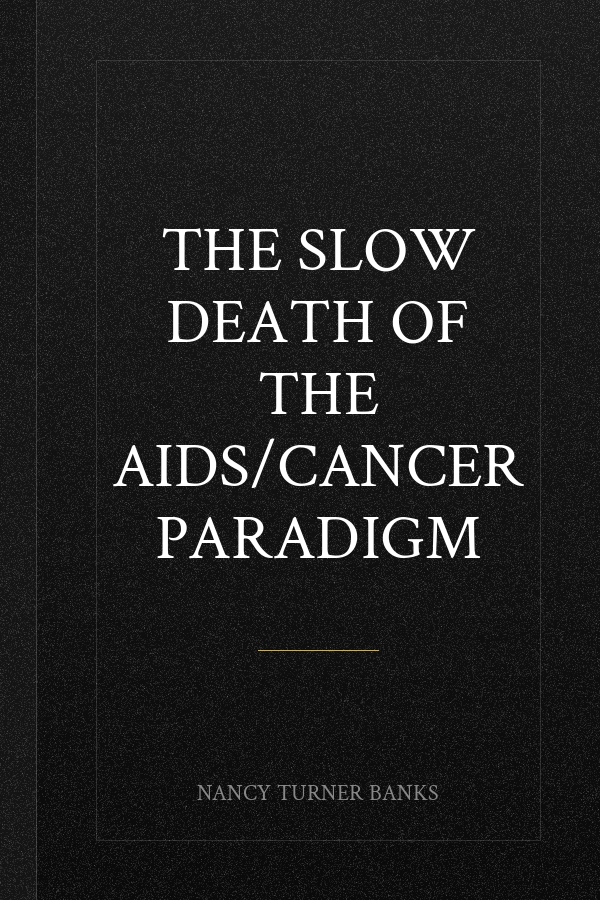
THE SLOW DEATH OF THE AIDS/CANCER PARADIGM
by Nancy Turner Banks
Sponsored
Synopsis
AIDS and cancer are neither random nor infectious diseases. Both are characterized by a proton deficit and a reversal of the chimeric/energetic cooperative trend of the eukaryotic nucleus with the mitochondrial endosymbiont. This pattern is not random. It is consistent with the evolutionary ...
AIDS and cancer are neither random nor infectious diseases. Both are characterized by a proton deficit and a reversal of the chimeric/energetic cooperative trend of the eukaryotic nucleus with the mitochondrial endosymbiont. This pattern is not random. It is consistent with the evolutionary heritage of the eukaryotic cell, which developed the foundational glycolytic pathways during the eon of the earth's anaerobic-reducing atmosphere. It should no longer be a mystery that these primitive metabolic patterns dominate when bio-stressors cause deterioration in the quantum and electromagnetic wave forms that allow coherency. The Slow Death of the AIDS/Cancer Paradigm confronts these issues full on.
You May Also Like

Her Lotus Year: China, the Roaring Twenties, and the Making of Wallis Simpson
Paul French

Opium and Absinthe
Lydia Kang

The Fourth Cup: Unveiling the Mystery of the Last Supper and the Cross
Scott Hahn

La noche del cazador (Psi/Cambiantes, #1)
Nalini Singh

West Coast Avengers Vol. 1: The Gospel Of Ultron (West Coast Avengers (2024-2025))
Gerry Duggan

Alone
Lisa Gardner
Psychology Picks
View All
Revenge of the Tipping Point: Overstories Superspreaders and the Rise of Social Engineering
Malcolm Gladwell

The Body Keeps the Score: Brain, Mind, and Body in the Healing of Trauma
Bessel van der Kolk

The Art of Spending Money: Simple Choices for a Richer Life
Morgan Housel
Unreasonable Hospitality: The Remarkable Power of Giving People More Than They Expect
Will Guidara

A Gentle Reminder
Bianca Sparacino

No Bad Parts: Healing Trauma & Restoring Wholeness with the Internal Family Systems Model
Richard C. Schwartz
