4
0
Support the library.
Your support helps keep books free for everyone ❤️
📍 Noticed
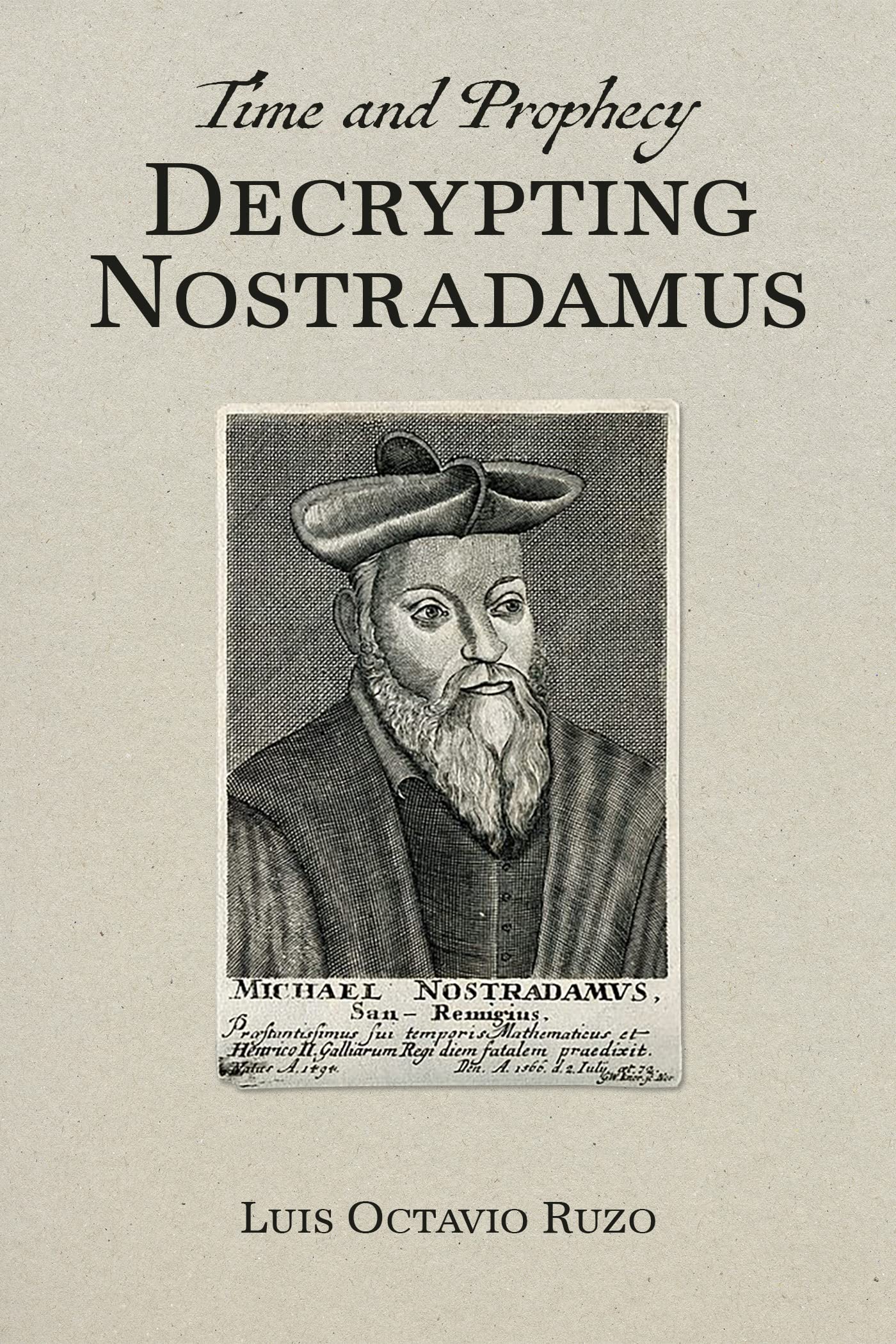
Time and Prophecy: Decrypting Nostradamus
by Luis Ruzo
Sponsored
Synopsis
The first part of Time and Prophecy reviews past and current theories in modern physics regarding the nature of Time. The author gives great importance to this issue since prophecy, and therefore Nostradamus’ work, are impossible if time is evolving and the future does not exist. This has been ...
The first part of Time and Prophecy reviews past and current theories in modern physics regarding the nature of Time. The author gives great importance to this issue since prophecy, and therefore Nostradamus’ work, are impossible if time is evolving and the future does not exist. This has been the position of most physicists relative to describing the apparent “flow” of time, but in recent years another school of thought has arisen that proposes that all of Time already exists, as the fabric of the universe we refer to as spacetime. In this scenario prophecy could at least be considered since the future, however unknowable, already exists and therefore could be “seen”. The book takes a novel approach to the study of Nostradamus’ Centuries and Presages. The author does not attempt to provide an interpretation of the prophetic quartets, but rather focuses on the cryptographic system that may have been employed in their construction and on the chronological format within which the work attempts to prophesy future events. Time and Prophecy represents an exhaustive study of some of the methods Nostradamus may have used to obscure his message. For example, using computer programs not previously available to earlier commentators, the author has established that over one hundred terms (personages, places, prophetic clues and events) each fit into themes that involve a specific numbers of quartets. Furthermore, in an overwhelming majority of quartets that mention specific places these fall onto straight lines when joined as points in a map. As the various lines from given quartets interact they form geometrical figures. The bulk of the book reviews the quartets involved in theme creation. In the last chapters the question as to why such a complex body of work was created is considered. The book discusses but does not provide interpretations of the prophecies, except for a very limited number of cases, nor does it explain how the cryptographic arrangement into themes of specific numbers of quartets and the creation of geometrical figures could lead to an ordering of the quartets in the Centuries and Presages. Indeed, these questions are left to the future.
You May Also Like

Sweater Success: From Cast-on to Closet, Learn to Fearlessly Knit Pullovers & Cardigans (Stitching Success)
Chantal Miyagishima

Men of Maize: The Modernist Epic of the Guatemalan Indians
Miguel Ángel Asturias

The Raven Boys (The Raven Cycle, #1)
Maggie Stiefvater

Meet Me by the Fountain: An Inside History of the Mall
Alexandra Lange

Absolute Wonder Woman Vol. 1: The Last Amazon (Absolute Universe)
Kelly Thompson

Swami and Friends, The Bachelor of Arts, The Dark Room, The English Teacher: Introduction by Alexander McCall Smith (Everyman's Library Contemporary Classics Series)
R.K. Narayan